A National Institute on Aging Artificial Intelligence and Technology Collaboratory

Research

Science


Precision intervention, enabled by shared AI capabilities

Older adults with similar diagnoses can differ substantially in biology, function, behavior, environment, and response to intervention. The Stanford AITC develops shared AI and technology capabilities to support precision intervention development, testing, and implementation, helping investigators examine who may benefit, what intervention should be delivered, and when and how delivery should adapt.

Selected research directions


Research Directions

SU-AITC brings together complementary AI and technology approaches for precision interventions in aging and AD/ADRD.

These areas highlight ongoing and published work relevant to SU-AITC. Featured demos and projects will be added as the Center develops.

Foundation Models

AI foundation models for learning scalable representations from multimodal brain and health data.
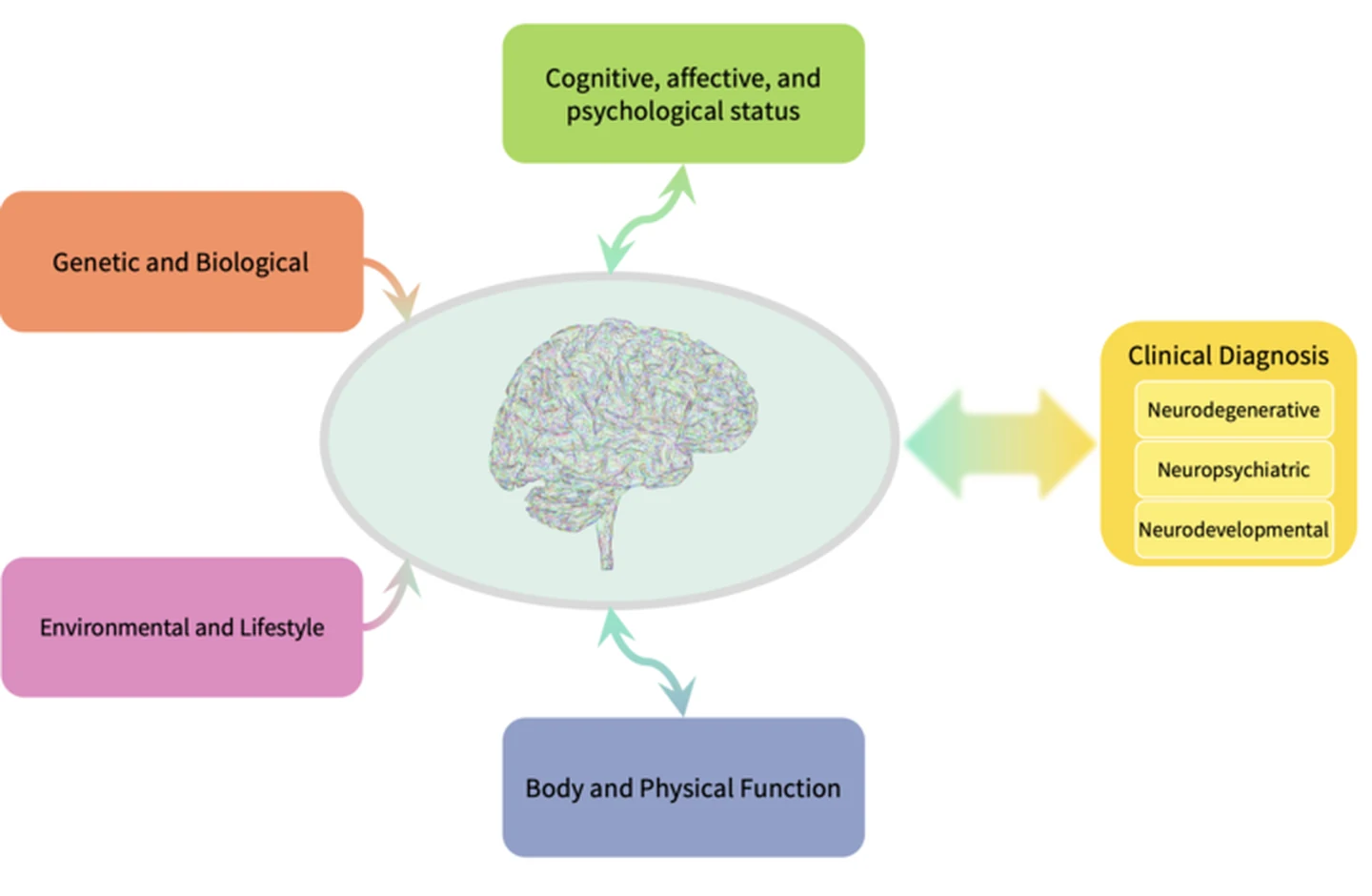
Diagram of the Brain World Model: genetic and biological, environmental and lifestyle, cognitive, affective, and psychological status, and body and physical function data converging on the brain and linking to neurodegenerative, neuropsychiatric, and neurodevelopmental clinical diagnosis.

Brain World Model (BWM)

A multimodal foundation model framework integrating biological, psychological, environmental, and physical health data to learn comprehensive representations of the human brain and enable more precise diagnosis and personalized care.
Digital Monitoring Tools

AI-enabled tools for monitoring mobility, behavior, function, and health in aging and AD/ADRD.

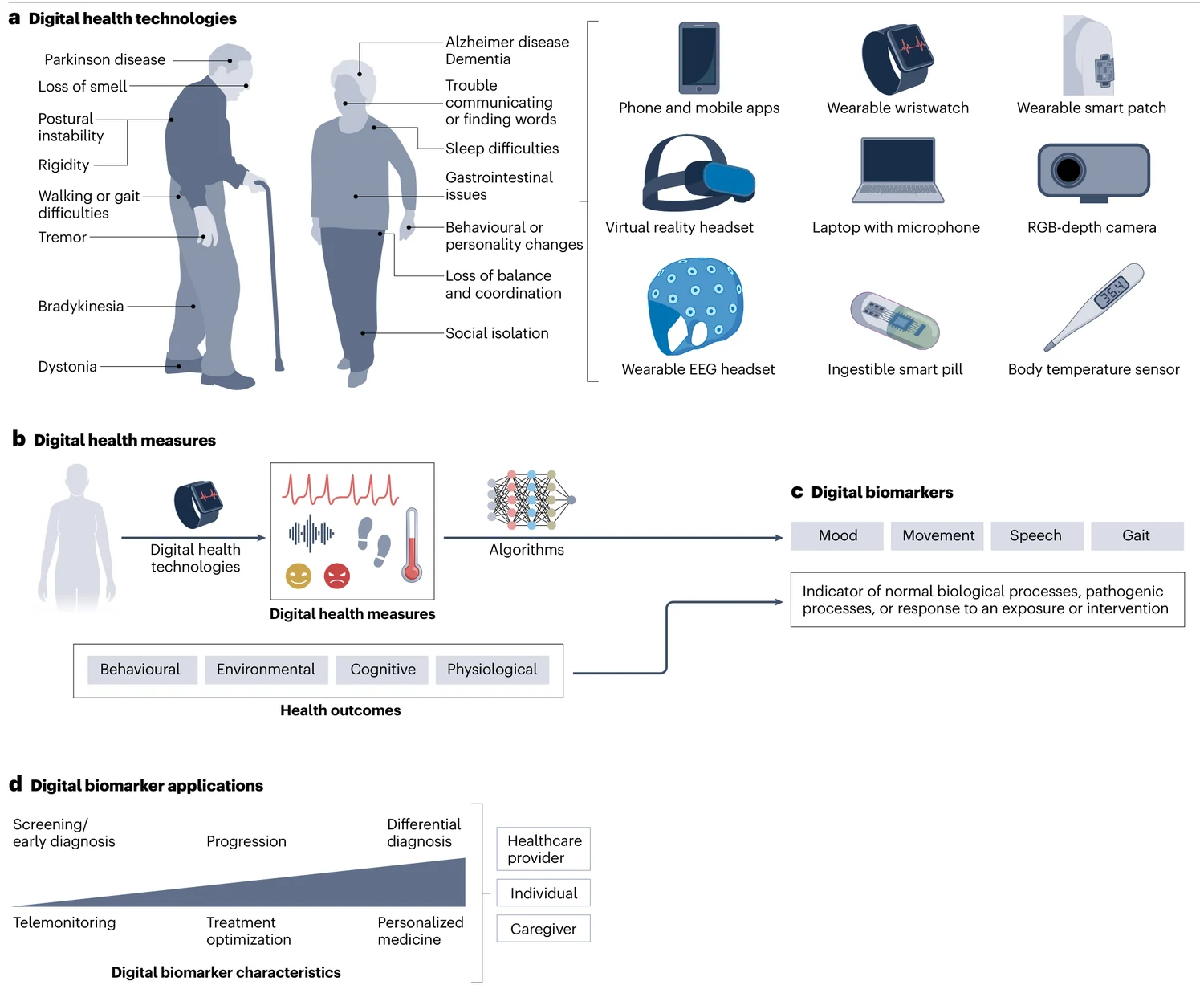
Figure showing digital health technologies such as phones, wearables, smart patches, virtual reality headsets, laptops, RGB-depth cameras, and EEG headsets, the digital health measures and biomarkers derived from them, and their clinical applications in Parkinson disease and Alzheimer disease.

Digital Biomarkers for Neurodegenerative Diseases

A framework for using smartphones, wearables, and ambient sensing technologies to continuously monitor cognitive, motor, behavioral, and physiological health in neurodegenerative diseases.

Nerrise et al., Nature Reviews Bioengineering, 2026

HMI / HCI

Human-centered and adaptive interfaces designed to support personalized interventions and interaction with older adults.

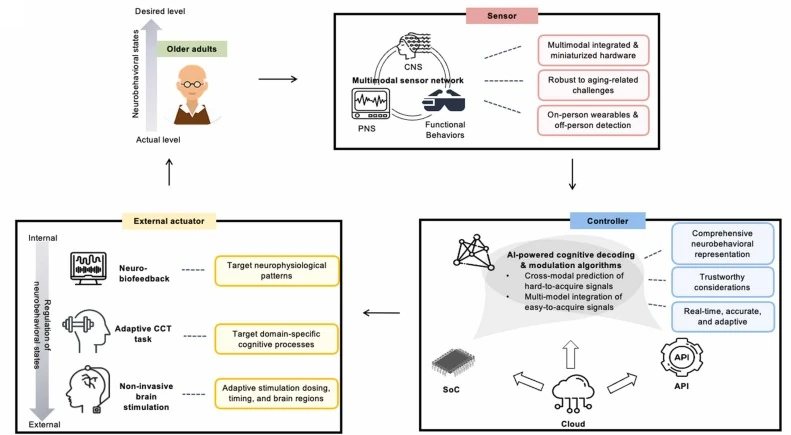
Diagram of a closed-loop human-machine interface for older adults: a multimodal sensor network feeds AI-powered cognitive decoding and modulation algorithms, which drive external actuators such as neurofeedback, adaptive cognitive training tasks, and non-invasive brain stimulation to regulate neurobehavioral states.

Aging-Friendly Closed-Loop Human-Machine Interface Framework

A closed-loop framework in which multimodal sensing, AI-powered cognitive decoding, and adaptive actuators (neurofeedback, adaptive cognitive training tasks, and non-invasive brain stimulation) personalize cognitive enhancement for older adults.

Zhou et al., Ageing Research Reviews, 2025. See also pSOPT Online (Tapparello et al., IEEE/ACM CHASE, 2026).

Intervention Engagement Techniques

Computational approaches for measuring and supporting engagement during technology-enabled interventions.

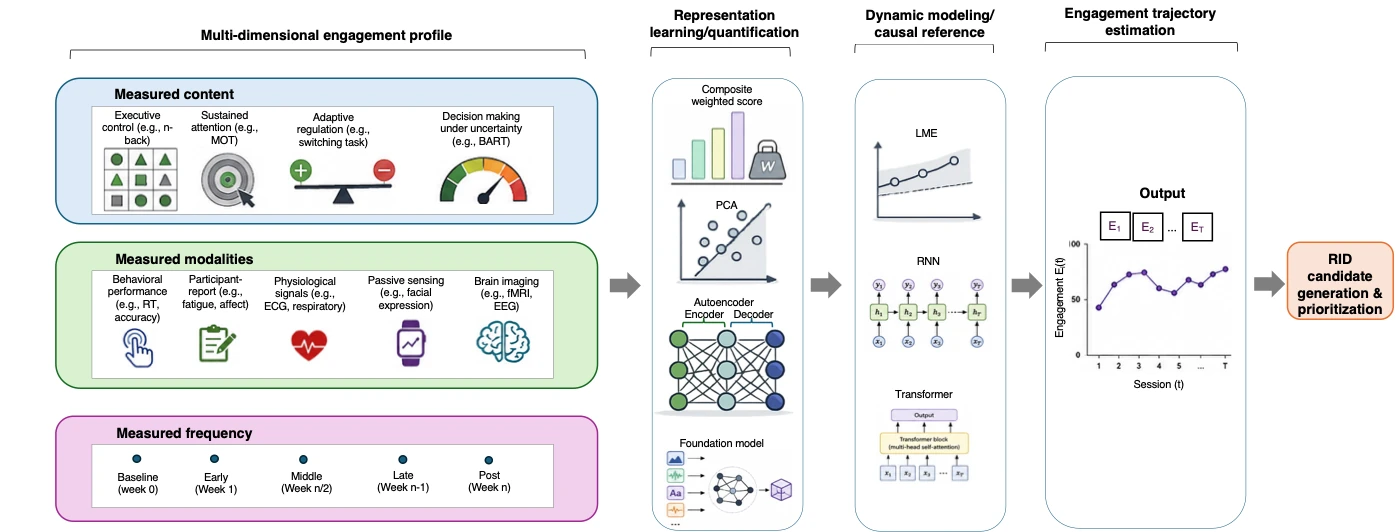
Diagram of the Universal Engagement Platform: a multi-dimensional engagement profile built from measured content, modalities, and frequency feeds representation learning, dynamic modeling, and engagement trajectory estimation, ending in candidate generation and prioritization.

Universal Engagement Platform (UEP)

A framework that builds multi-dimensional engagement profiles from behavioral, self-report, physiological, passive sensing, and brain imaging measures, models them over time, and estimates engagement trajectories to guide intervention design.

Guimarães et al., Ageing Research Reviews, 2025

Funding


Research Award Program

SU-AITC will support research teams advancing AI- and technology-enabled precision interventions for aging and AD/ADRD. Funding opportunities and supported projects will be announced here.